It’s Thanksgiving week, and a lot of you are packing for a rental cabin or a beach house right now.
Last Thanksgiving, I wrote about the quiet moment after the dishes are done, when someone looks out at the view and says what everyone is thinking: maybe one day we could have a place like this.
For a lot of families, the next thing that happens is a late-night scroll through land listings. A view catches your eye, the price looks fair, and the dream suddenly feels close. That’s exactly why, a month after last Thanksgiving, I wrote Before You Buy the View: the view is the easy part. What the land will actually let you build is the part that decides everything else.
So this year’s post is the next chapter. Not just “dream a little,” but how to turn this weekend into a smart first step.
This weekend: notice what actually works
You’re staying in a real test case. Use it.
Before you head home, jot down a few notes on your phone:
What worked for your family — the bunk room, the big table, the porch everyone ended up on
What didn’t — not enough storage, bedrooms too close together, nowhere to park, no privacy from the neighbors
How you got there — was the driveway steep or scary? Did the car make it up the last hill? Was there cell service?
Where the house sits — does the view hit the rooms you actually use? Where does the sun land in the morning?
Those last two matter more than most people think. The arrival, the driveway, and where the house sits on the land shape how a place feels. If you ever rent your own place out, they shape the photos, the reviews, and the nightly rate too. Good siting makes for better photos, and better photos make for better bookings.
The view is not the lot
Here’s the hard truth I’ve learned from more than 450 projects over 40 years on 5 continents: a beautiful view tells you almost nothing about what a property can support.
Listings say things like “utilities nearby” and “ideal homesite.” Those aren’t technical terms. What really decides your project is quieter:
Zoning and rules — what you can build, how big, how close to the property lines, and whether short-term rentals are even allowed
Access — whether a safe driveway and fire-truck access are realistic, and what they’ll cost
Slope — how much grading, retaining, and foundation work the hillside will need
Water, septic, and power — whether the soil can take a septic system and how far utilities really are
Flood, wind, and buffers — especially on lake and coastal land, where the best spots carry the most rules
I’ve watched people close on land and then learn the “easy” driveway needed switchbacks and a long retaining wall, or that the pretty meadow couldn’t take a septic system. Each of those was avoidable with a little homework up front.
If you’re looking at mountain land, our free Mountain Lot Quick Sheet puts the first checks on one page: slope, soil, access, and orientation. And our Cabin Lot Quick Sheet post walks through those checks in plain English.
Design for the people, not a stock plan
Once you know what the land allows, the fun part starts: shaping a place around how your family actually lives.
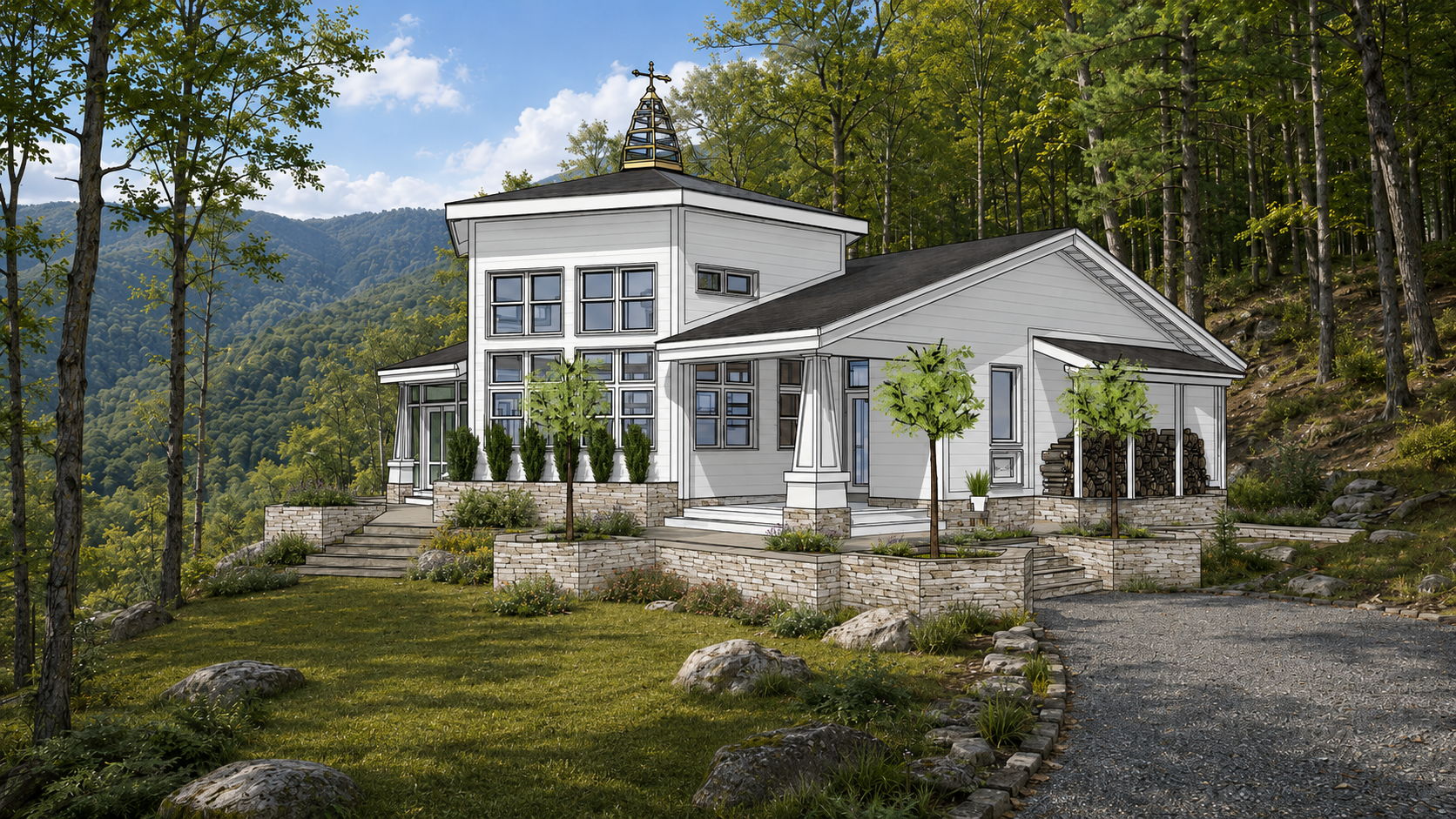
Take the Bee Hive Cabin. It started with a simple goal: give two grandparents a place where their five grandchildren could gather and slow down. So instead of a standard living room, the heart of the house is a round kitchen and great room built for games at the table, meals made together, and long conversations, all opening to a 180-degree view of the valley. No stock plan would have gotten there. You can see more ideas on our Getaway page.
Think in phases, and respect the numbers
Instead of asking, “Can we afford our dream house?” try asking, “What’s a smart Phase One that feels like us and can grow?”
That might be a smaller first cabin, an ADU-style retreat, or a garage with an apartment now and a larger house later. On the coast, it might be a compact cottage that gets the outdoor living right.
Be honest about what you can comfortably invest now, and what a short-term rental could realistically help carry. The land plays a big part in that math. Two lots at the same price can cost very different amounts to build on, because of the driveway, the septic system, or the foundation the slope requires. Knowing that before you buy is how you avoid overbuilding, underbuilding, or overpaying for land.
The first step is smaller than it feels
At Facet Retreats, we’re an architect-led studio designing cabins and short-term rentals from the Carolina mountains to the coast.
Just starting to explore? Book a free 15-minute Quick Fit Call. Tell me where you’re staying this week, what you liked, and what you’re picturing. No pressure, no script.
Have a lot or a couple of listings in mind? Book a 30-minute Site Strategy Review, or go straight to a Lot Analysis. Send us the address or listing link, and in about 5 to 10 business days you’ll get a plain-English report on zoning, access, slope, utilities, and cost risks, plus my honest recommendation: go ahead, renegotiate, or keep looking.
A small check now protects a much bigger decision later.
A year from now
Picture next Thanksgiving.
You could be in another rental, still saying “someday.” Or you could be standing on land you checked before you bought it, with a plan that fits it, maybe only Phase One, but yours.
So enjoy the view this week. Then look past it.
And when Black Friday comes, while everyone else is chasing deals, you could spend fifteen minutes on something that lasts a lot longer.
Happy Thanksgiving from our family to yours.
I’m David Dial, a licensed architect, and I lead Facet Retreats, a studio of Facet Architecture in Charlotte, NC.
Start here · Book a Quick Fit Call · (833) 322-3838